 |
| The Wise Men Follow the Star - His Light - Over Bethlehem. |
Thursday, December 25, 2014
Friday, December 19, 2014

Friday, December 12, 2014
Homework for Monday / & P1 Quiz Reminder
The Development of the Space Race

Please complete the Space Race questions by Monday at 8:20 a. They are posted to your Cold War Notes document. They are:
The Space Race
DIRECTIONS: Read "“Khrushchev and Peaceful Co-existence” (Pgs. 93-96). It is about the second test of peaceful co-existence, the Space Race. It is in your shared Cold War Readings file. Answer the following 13 questions.

AND, don't forget the P1 Quiz on formatting
your Paper 1 Exam

Wednesday, December 10, 2014
Study Guide for Thursday's Double Quiz
Khrushchev and "Peaceful Co-existence" ??

Study guide for tomorrow's Double-Quiz (75 points)
Provide a general description of "Peaceful Co-existence." (Question No. 1 on your homework).
Be able to provide at least three of examples of what "De-Stalinization" looked like. (Practical applications).
What was a major purpose of the Warsaw Pact as far as the Soviet Union was concerned?
In general, what countries were members of the Warsaw Pact?
What was a major reason why the Soviets invaded Hungary after leaving less than a week before?
Why didn't the West provide aid to the Hungarians? (Question No. 8 on your homework).
The last "question" will be a document-based question based on a Paper 1 exam. You can't study for it.
Sunday, December 7, 2014
Finish Homework by Monday at 8:20 a.!
Complete "Stalin Dies!" Homework by Monday 8:20 a.

And, Khrushchev Takes Over
 |
| Ding Dong! The wicked dictator is dead! March 5, 1953. |
Khrushchev, De-Stalinization, and Peaceful Co-Existence
DIRECTIONS: Read "“Khrushchev and Peaceful Co-existence” (Pgs. 88-92). It is in your shared Cold War Readings file. Answer the following 9 questions.
Thursday, December 4, 2014
Stalin Dies! Khrushchev Takes Over Homework
Stalin Dies! Khrushchev Takes Over
|
| Ding Dong! The wicked dictator is dead! March 5, 1953. |
Khrushchev, De-Stalinization, and Peaceful Co-Existence
DIRECTIONS: Read "“Khrushchev and Peaceful Co-existence” (Pgs. 88-92). It is in your shared Cold War Readings file. Answer the following 9 questions.
Saturday, November 29, 2014
Enjoy the Remainder of Your Break
Upon our return to school Monday we will finish up with the Korean War and then discuss Stalin's death, Peaceful Coexistence, and the Space Race.
Until then, however, enjoy the
Patriots v. Packers game Sunday! It will be the toughest game for the Pats before the Superbowl!
 |
| jhyer's prediction: Patriots 24 | Packers 17 |
Friday, November 21, 2014
Monday's ALMOST Double Quiz Study Guide
STUDY GUIDE FOR Monday's ALMOST DOUBLE Quiz
NOTE: The 1/2 Test has been downgraded to a Double Quiz due to the impending snowstorm in Buffalo. So, you only need to know the following:
- Make sure you know your answers to questions 2, 2a. - 2f. under "U.S. Foreign Policy in the 1950s" on your NOTES.
- Know the difference between "rollback" and "containment."
- Be able to list the "Six Major Events" that caused the U.S. to feel it was losing political and technical race with the Communists in the 1950s. (Question 4 on U.S. Foreign Policy.)
- What is an ICBM?
- Know the formal names of North and South Korean and who led each at the beginning of the Korean War.
- Know - in general terms - how the Korean War unfolded.
- Know why MacArthur was fired by Truman.
- Who was John Foster Dulles? How did he view the United States’ role against the Communists?
Thursday, November 20, 2014
1950s Foreign Policy: Korean War + Study Guide for Monday!
Korean War + Study Guide
for Monday's Half-Test

First, be sure to finish your homework that is due tomorrow at 3:10 p. Find the instructions here.
STUDY GUIDE FOR Monday's HALF-TEST
- Make sure you know your answers to questions 2, 2a. - 2f. under "U.S. Foreign Policy in the 1950s" on your NOTES.
- Know the difference between "rollback" and "containment."
- Be able to list the "Six Major Events" that caused the U.S. to feel it was losing political and technical race with the Communists in the 1950s. (Question 4 on U.S. Foreign Policy.)
- What is an ICBM?
- Know the formal names of North and South Korean and who led each at the beginning of the Korean War.
- Know - in general terms - how the Korean War unfolded.
- Know why MacArthur was fired by Truman.
- Make sure you understand the 1950-era context of Gen. Douglas MacArthur's quote: "Asia is where the communist conspirators have decided to make their play for global conquest. If we lose this war, the fall of Europe is inevitable. There is no choice but victory."
- How did Stalin's death impact the end of the Korean conflict?
- In a paragraph or two be prepared to address the Cummings' quote: “The civil conflict had not been worked through but frozen by outside intervention.” (Study questions No. 8 and 9 under the Korean War Notes.)
- Who was Dwight D. Eisenhower? How did he approach Communism?
- Who was John Foster Dulles? How did he view the United States’ role against the Communists?
Wednesday, November 19, 2014
The Korean War Homework
The Korean War - Containment in Asia
The NSC-68 in Practice
 |
| MacArthur dared cross this line - and then some! |
DIRECTIONS: Read "Korean War 1950-53." It is in your shared Cold War Readings file. Please read it (p. 68-77) and answer the 9 questions which are at the bottom of your Cold War Notes.
Your answer are due by 3:10 p. on Friday, Nov. 21
Sunday, November 16, 2014
Homework Due Monday 12:30 p. | 1/2 Test Friday
Don't Forget to Finish Monday's Homework
Due 12:30 p.

Forward Looking: Half-Test on Friday
(Topic 1950s Foreign Policy)
Thursday, November 13, 2014
U.S. Foreign Policy in the 1950s Homework
U.S. Foreign Policy in the 1950s:
Fear of Communism's Growth
| Oh, great! Now China and North Korea have turned Commie. |
Please complete the "1950s Foreign Policy." The reading is in your shared reading
folder. All questions are at the bottom of your Cold War Notes document.
They are:
U.S. Foreign Policy in the 1950s
DIRECTIONS: Read the document, 1950s Foreign Policy, and answer the following 12 questions.
Your answers are due no later than Monday at 12:30 p.
Tuesday, November 11, 2014
Meet in the Computer Lab for Essay Test
Essay Test Tomorrow - Study -
Meet in the Computer Lab Wed.!
 |
| You After Seeing Your New and Improved Essay Score! |
Tomorrow - WEDnesday - you will write an essay based on the same prompt you wrote last Friday or did for a make-up on Monday. There are no tricks to this. It is Groundhog Day all over again. I expect to see improvement on your essay based on my comments and your work on responding to those comments. You will get a second essay grade which hopefully will be greater than the one you received on Friday’s essay.
Monday, November 10, 2014
Essay Test (AGAIN!) Wednesday!
Preparing for Wednesday's Essay Test
 |
| Don't be this student! Review & Study |
Great job on your first essays as juniors. Excellent effort. Now, let’s do it again!
You will have another Essay Test on Wednesday after returning from our one-day holiday in honor of our Nation’s veterans.
1. First, everyone did a very good job with the basic structure of the essay, which includes an introduction, conclusion, and the body of the essay. Most paragraphs started with a topic sentence and focused on one main point. So, AWESOME FIRST EFFORTS as Juniors!
2. Second, in order to get ready for the exam, I want you to spend time during class today and as homework, carefully reading my comments on your essay. Please thoughtfully “reply” to my comments using the comment function within Google documents. DO NOT “RESOLVE” THE COMMENTS. If you have any questions or the need for further clarification, please ask me during or after class today. Don’t wait until Wednesday.
3. Third, on Wednesday you will write an essay based on the same prompt. There are no tricks to this. It is Groundhog Day. I expect to see improvement on your essay based on my comments and your work on responding to those comments. You will get a second essay grade which hopefully will be greater than the one you received on Friday’s essay.
Essay Prompt
“Mutual fears and the search for security were the reasons for the breakdown of East–West relations between 1945 and 1949.” With specific reference to developments in this period, to what extent do you agree with this statement?
Here is the grading scale explanations we went over in class:
I.B: 2/7 Sturgis: 55-64
- Answers reveal little understanding of the question.
- While historical details are present, they are largely inaccurate and/or of marginal relevance to the task.
- There is little or no understanding of historical context or historical processes.
- While there may be a recognizable essay structure, there is minimal focus on the task.
I.B: 3/7 Sturgis: 65-73
- Answers indicate some understanding of the question.
- There is some relevant historical knowledge, but it is limited in terms of quantity and quality.
- There may be some attempt to place events in their historical context.
- Understanding of historical processes and (where appropriate) comparison and contrast may be present but underdeveloped. (Alternatively, there is SOME attempt(s)at a coherent argument that requires further substantiation in order to be considered analysis.)
- While there may be a recognizable essay structure, the question is only partially addressed.
I.B.: 4/7 Sturgis: 74-79
- Answers indicate that the demands of the question are generally understood.
- Relevant historical knowledge is present and applied but is not fully or accurately detailed and is presented in a narrative or descriptive manner. Alternatively, there is coherent argument that requires further substantiation. Relevant critical commentary is implicit.
- There has been an attempt to place events in their historical context and to show an understanding of historical processes and (where appropriate) comparison and contrast.
- There is evidence of an attempt to follow a structured approach, either chronological or thematic.
I.B.: 5/7 Sturgis: 80-86
- Answers indicate that the demands of the question are understood and addressed though not all implications are considered.
- Relevant, largely accurate historical knowledge is present and applied as evidence. Answers may attempt some critical commentary.
- Events are generally placed in their historical context. There is an understanding of historical processes and (where appropriate) comparison and contrast.
- There may be some awareness (“some” at best) of different approaches to, and interpretations of, historical issues and events. However, responses that mainly summarize the views of historians and use these as a substitute for, rather than a supplement to, the deployment of relevant historical knowledge cannot reach the top of this band.
- There is a clear attempt to structure answers either chronologically or thematically.
Friday, November 7, 2014
Grades are Posted - Don't Open Exams no Matter What!!
No Homework
Your 1st Quarter Grades are Posted on Gradebook
 |
| Preview of our Next Segment, The 1950s: Stalin Dies! |
See you Monday. Please be prepared to work on your Essay Exams. However, do not open them until I instruct you to do so.
Saturday, November 1, 2014
2Q - 1st Week Preview: Quiz Mon. & Test Fri.!
Previewing Next Week: Dbl. Quiz & Test
 |
| Yeah! Freedom! ... 'Merica! |
On Monday there is a map double quiz on the East and West blocs in Europe. There will also be a couple of questions related to last week's lessons. (You will either know or not!)
To see a copy of the map, see Friday's blog post or look in your shared reading folder for a .jpeg of the map.
There will be a Origins of the Cold War Essay exam on Friday. We will spend the two days leading to the exam going over what you need to know to be successful on this essay. Your score will be more focused on mechanics rather than content.
So, in short:
Quiz Monday
Essay Test on Friday
These will be your first grades of the 2nd quarter.
Thursday, October 30, 2014
Creation of NATO In-Class / Homework
Creation of NATO / Germany Divided

Read the shared document, “NATO Created - 1949,” and answer the following questions that have been placed at the bottom of your Cold War Notes file.
Your answers are due no later than Friday by 1:20 p.
MAP QUIZ on Monday. Be sure to know the Eastern Bloc and Western Bloc countries on the Divided Europe 1949 Map on the second page of the NATO handout. The map is also on this blog posting and there is a copy in your shared reading folder.
Wednesday, October 29, 2014
Complete Emergence of the Western and Eastern Blocs
Don't forget Thursday's paragraph quiz on the Breakdown of Allied Cooperation in Germany. We went over this in class on Wednesday!

The following is due by Lunchtime Thursday!
There are two distinct sets of questions for the homework that is due Thursday by lunchtime. All questions and reading assignments are found on your Cold War Notes document.
Complete the first two sets of questions that I put on your document last week. They are entitled, The Emergence of a Western Bloc and The Emergence of a Eastern Bloc.
Monday, October 20, 2014
Wednesday's Short Answer Exam Study Guide
Origins of the Cold War Short Answer Exam
 |
| Don't worry the test will be easy. Just a few obstacles to overcome :) |
Please know the following (1-33) for Wednesday's exam:
Feel free to break up this list, share it with friends, and create study guides. That is why I numbered it.
- What are the capital cities of Soviet Union, Poland, Czechoslovakia, East Germany, and Austria
- What are Steps One to Five
- Know the following "key players": Franklin D. Roosevelt, Truman, Churchill, Attlee, Stalin, Molotov, Stimson, Marshall, Oppenheimer, Kennan
- What is the Grand Alliance, aka the Big Three
- Know the order of the major wartime conferences
- Know at least one major decision to come out of the Tehran Conference
- What country was invaded by Germany that started WWII?
- What was the Molotov-Ribbentrop Pact?
- Who were the Axis powers?
- why did the Soviet Army stop outside of Warsaw?
- What was ONE priority of each of the Big Three going into Yalta?
- What were two major decisions reached at Yalta?
- What didn't Stalin do with Poland following Yalta?
- Know each of the major events between Yalta and Potsdam.
- What was ONE major disagreement at Potsdam?
- Other than ending the war, what was another reason the atomic bombs were used on Japan?
- What was ONE statement that shocked the British when Truman delivered the "12-Point" speech?
- What were TWO key main ideas from Keenan's "Long Telegram"?
- Where was the "Iron Curtain" speech delivered?
- What was Churchill's main point of the speech?
- What is ONE way that Stalin reacted to the speech?
- What countries were the focus of the U.S. with the Truman Doctrine?
- What new foreign policy did the Truman Doctrine embody?
- What is ONE reason the Truman Doctrine could be considered a turning point of the Cold War?
- What were the European conditions that led the creation of the Marshall Plan?
- What was ONE reason that politicians might OPPOSE the Marshall Plan? (MP)
- What is the official title of the Marshall Plan? (ERP)
- What were THREE countries under Staln's control that didn't take MP aid?
- What were FOUR Western European countries that did take MP aid?
- What communist country did take MP aid?
- What is ONE way Stalin reacted to the MP?
- What does COMECON stand for?
- What does COMINFORM stand for?
Thursday, October 16, 2014
Complete Marshall Plan Recommendation Letter
The Marshall Plan 

Please complete the Marshall Plan recommendation for President Truman by Friday before class. I've put a digital copy of the reading packet in the shared reading folder. It is entitled, "Marshall Plan Readings". The guiding question is at the bottom of your Cold War Notes document.
NOTE: You can use bullet points instead of paragraphs. Make sure they are detailed and that you still include a counter claim.
Tuesday, October 7, 2014
Truman Doctrine & the Marshall Plan Homework
The Truman Doctrine and Marshall Plan
Protection and Recovery for Europe
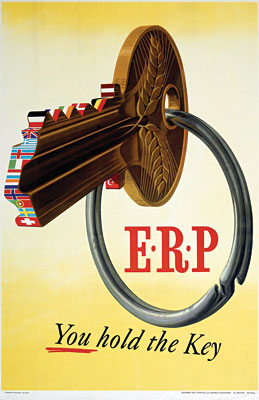 |
| ERP is an acronym for European Recovery Program |
At the bottom of your Cold War Notes document you will find 11 new questions. Please complete the associated readings, which are listed under the following headings and answer the questions.
- Policy of Containment (1 question)
- The Truman Doctrine (3 questions)
- The Marshall Plan (7 questions)
Wednesday, October 1, 2014
Wednesday's Homework: U.S. Foreign Policy: Containment
U.S. Foreign Policy: Containment
 |
| A question I often ask myself, and so should you! |
At the bottom of your Cold War Notes I have added a SINGLE question on the Policy of Containment. Please consider the class discussions and homework you have done this week when answering it.
Your answer is due Thursday at 8:20 a.
_________________________________________________________________________________
Telegrams, Salami & Curtains Double Quiz Study Guide
Quiz will be Thursday. All short answer questions.
Know the following:
--The "context" surrounding the development of U.S. Foreign Policy: Kennan's "Long Telegram," Stalin's Salami Tactics, Soviet Pressure on Iran, Greece, Turkey, et. al., and Stalin's reaction to the "Iron Curtain" speech. (This is the homework question!)
--Be able to define "Salami" tactics as the Soviet Union practiced it. You should know a notable example (Poland) as well.
--Know at least four other countries where the Soviets were applying pressure in from 1945 to 1947 other than Iran.
--What was the basis for Churchill's "Iron Curtain" speech?
--Know Stalin's reaction to the "Iron Curtain" speech.
Monday, September 29, 2014
Salami and Curtains Homework - Due Wednesday
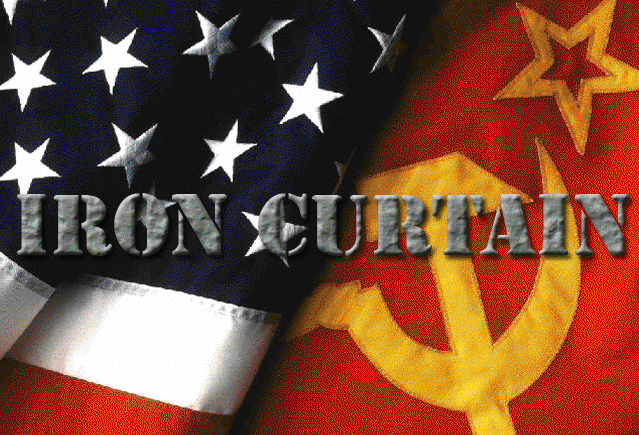
Soviet Aggression and the "Iron Curtain"
 |
| The Soviet Union's "Salami" Tactic |
Homework Directions: The following is due by 8:20 a. Wednesday. There will be a double-quiz on this material, which comprises Step 2 (Containment) and Step 3 (Iron Curtain). The double-quiz will be on Thursday, Oct. 2.
At the bottom of your Cold War Notes document you will find 11 new questions. Please complete the associated readings, which are listed under the following headings and answer the questions.
- Harry S. Truman and the Potsdam Conference
- Soviet Salami Tactics
- Soviet Pressure on Iran, et. al.
- The "Iron Curtain" Speech
Friday, September 26, 2014
Finish Keenan's Containment Message Presentation
George Keenan's Containment Message to the U.S.

Please finish the Google slides of the most essential message that George Keenan was telling the United States government about the conduct of the Soviet Union in 1945.
HINT: Use bullet points.
Use the paper copy of Keenan's Containment Policy that you were using in class Friday. I've also shared it with you digitally in the reading file. It is titled, "Keenan's "Long Telegram."
The SIX slides need to be completed by Monday at 8:20 a.
Have a good weekend.
Saturday, September 20, 2014
TUESDAY'S Half-Test Study Guide
Cold War: Origins: Step 1
Tuesday's Half-Test Study Guide
 |
| Harry S. Truman and James Brynes, Truman's Sec. of State and anti-communist |
- On TUESDAY, I am giving your a "half-test," which means it is half the value of a regular test
- This will NOT be an essay test.
- It will consist of short answers, much like your quizzes have been so far this month.
The focus of the quiz in on Step 1 of the Eight Steps to the Division of Europe by 1949.
You should know:
You should know:
- Western military stragegy in Europe vs. Stalin's desire for Allied intervention
- The main focuses of the three conferences (T / Y / P)
- Priorities of each leader heading into Yalta/Potsdam
- The Polish Question
- Significance of events between Yalta and Potsdam (Death of FDR; Truman becomes U.S. president; Germany surrenders; Trinity Successful)
- Attlee Replacing Churchill
- Atomic Bombing of Hiroshima and Nagasaki (Stalin blocked?; Truman aggressive?)
Be able to identify the following people: (Hint: Remember the "Key Players" slide?)
- Franklin D. Roosevelt
- Harry S. Truman
- Winston Churchill
- Clement Attlee
- Josef Stalin
- V. Molotov
- Henry Stimson
- James L. Byrnes
- Robert Oppenheimer
Thursday, September 18, 2014
Hiroshima and the Cold War Homework
Hiroshima and the Cold War

Please find the reading "Hiroshima and the Cold War" in your shared reading folder. Read it and answer the following questions about the atomic bomb and the origins of the Cold War. Please put your answers on your Cold War NOTES shared document. (I've already put the questions on your document.)
These questions are to be completed by 8:20 a. Monday, Sept. 22.
1. Do Sources A and B prove that Truman dropped the bomb to save American soldiers' lives? Why or why not?
2. Do you trust Source D? Explain.
3. Point
No. 2 under the heading "Possibility TWO" lists three of Truman's
advisors: Davies, Stimson and Byrnes. Please provide a brief one to two
sentences as to who they were in relation to Truman's administration in
1945.
4.
Did Hiroshima start the Cold War ... and if so, how? Discuss which of
the two possibilities you think most closely fits the facts.
Friday, September 12, 2014
Friday's Homework Due Mon., Sept. 15
Please complete the following on your Cold War NOTES shared worksheet. I've added four questions for you at the bottom of the document. They are questions 1 & 2 in Section 4 and questions 3 & 4 in Section 5. The necessary reading is " Cold War - Ch. 2," pages 28-31. You can also read the section about the Yalta Conference on this posting.
Please have these completed by Monday at 8:20 a.

Thursday, September 11, 2014
Friday's Quiz Study Guide
Friday's Quiz Study Guide

Be prepared for a brief (green-style) quiz Friday. Please make sure you know the following. (I went over this during class on Thursday.)
Be sure to review your notes and the "Seeds of Conflict" presentation that I shared with you.
- A few examples of why there were lingering animosities between the Soviet Union and the U.S.
- How Hitler contributed to the start of the Cold War in part.
- Idealism v. Self-Interest of the Soviet Union and the United States
- Why the U.S. and the U.S.S.R. emerged as superpowers following WWII
- Why Stalin had reason to be upset following the Allies actions during WWII.
Monday, September 8, 2014
Cold War Begins Homework
The Cold War Begins
 |
| And they look so happy together. What could possibly go wrong? |
Answer QUESTIONS 1 - 8 under the COLD WAR BEGINS section on your Cold War NOTES document. I've already put the questions on the document for you. You're welcome :)
DUE THURSDAY at 8:20 a.
Saturday, September 6, 2014
Cold War Origins Preview: Wartime Conferences
Wartime Conferences Can Be Fun!
 |
| The Yalta Conference - February 1945. FDR soon dies from heart failure.' |
Thursday, September 4, 2014
Quiz Friday on Phases of the Cold War
Quiz Friday on Phases of the Cold War
 |
| Don't worry. Both are only going through a phase. |
Phases of the Cold War
1917 - 1945: Lingering Animosities
1943 - 1949: Origins (8 Steps to the Division of Europe)
1950 - 1953: Shift to Asia & Beyond
1953 - 1957: The Thaw
1958 - 1962: Crisis & Nuclear Confrontation
1963 - 1978: The Era of Détente: Sino-U.S. Develop Cordial Relations
1979 - 1984: Second Cold War
1976 - 1989 - China After Mao (Communism in Crisis)
1985 - 1991: Gorbachev Era: Glasnost & Perestroika (Communism in Crisis)
Subscribe to:
Comments (Atom)