Get to Know Your Topic Better
 |
| Have You Hugged Your Research Today? |
By Tuesday, May 5 at 3:10 p.
1. Have at least 18 major and specific keywords listed for your topic / question.
 |
| Fill this out with at least 18 major and specific key words |
2. Using Questia, find at least TWO academic journals (red) or magazine articles (green) about your topic. Save them to your active project and then create a bibliography entry for them using the same instructions you used for books. See here for a refresher. Post to Section F. Include "JOURNAL:" at the beginning to make it clear it is a journal entry.
 |
| A Journal article Lauren might be interested in for the 1980 Olympic Boycott by the U.S. |
For example, using the above Questia example circled in red, the bib citation reads:
JOURNAL: Siekmann, Robert C. R. "The Boycott of the 1980 Moscow Olympic Games and Detente." The International Sports Law Journal, no. 3-4 (2011): 183+. http://questiaschool.com/read/1G1-352250506/the-boycott-of-the-1980-moscow-olympic-games-and-detente.
By Thursday, May 7 at 8:20 a.

4. Locate a MAJOR primary source related to your topic/question. Using Turabian, list the source in Sec. C (Do NOT place in Section F just yet.)
 |
| Primary Source: A Civil Defense Poster from the 1950s |
5. While evaluating your secondary sources begin to decide which ONE might be a good one to do an OPVL. Using Turabian, list the source in Sec. C and in Sec. F.
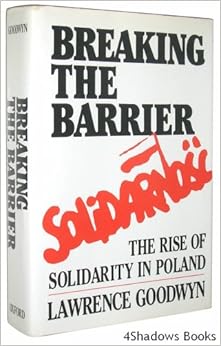 |
| Secondary Source: A 1991 look at the Solidarity Movement in Poland |
